



Discover AI Text-to-Speech for Web Content: Best Voice Generators and Accessibility Tools
AI Text-to-Speech (TTS) technology has revolutionized the way we interact with web content, making it more accessible and engaging for users. This article delves into the mechanics of AI TTS, its benefits for web content, and how it enhances user experience. As digital accessibility becomes increasingly important, understanding AI voice generators and their applications is essential for web developers and content creators alike. Many websites struggle to provide inclusive experiences for all users, particularly those with visual impairments or reading difficulties. AI TTS offers a solution by converting written text into natural-sounding speech, thereby improving accessibility and user engagement. In this article, we will explore the workings of AI TTS, the best platforms available, integration methods for websites, and the legal standards surrounding accessibility.
Further illustrating the practical application of AI in enhancing web accessibility, recent research highlights how AI-powered tools, including large language models and OpenAI’s Text-to-Speech, are being leveraged to create barrier-free content for individuals with visual impairments.
AI Tools & OpenAI TTS for Accessible Websites
The work is devoted to the analysis of the opportunities for the creation of barrier-free or accessible content, as well as the features and abilities of AI (Artificial Intelligence) powered tools for so-called accessible websites. Such AI-powered tools include LLMs (Large Language Models) like ChatGPT products and corresponding APIs. An example workflow to enhance accessibility for blind and visually impaired individuals was constructed. In the experimental part, ChatGPT Vision APIs and OpenAI’s Text-to-Speech (TTS) were used to explore and enhance accessibility for blind and visually impaired individuals.
AI-Powered Tools to Create Accessible Websites, U Winkler, 2024
What is AI Text-to-Speech and How Does It Enhance Web Content?
AI Text-to-Speech (TTS) is a technology that converts written text into spoken words using advanced algorithms and machine learning techniques. By employing natural language processing, AI TTS systems can produce human-like speech that enhances the user experience on websites. This technology not only makes content more accessible to individuals with disabilities but also caters to users who prefer auditory learning. The integration of AI TTS into web content can significantly improve engagement and retention rates, as users are more likely to interact with content that is presented in a format they find comfortable.
How Does AI Speech Synthesis Work for Natural Sounding Voices?
AI speech synthesis relies on complex algorithms that analyze text and convert it into speech. The process begins with text normalization, where the system interprets the text’s structure and meaning. Next, it utilizes deep learning models, often based on neural networks, to generate speech that mimics human intonation and rhythm. These models are trained on vast datasets of recorded speech, allowing them to produce natural-sounding voices. The result is a seamless auditory experience that can be tailored to various applications, from virtual assistants to educational tools.
Cutting-edge research continues to push the boundaries of speech generation, with models like Voicebox demonstrating advanced capabilities in text-guided multilingual speech synthesis and beyond.
Voicebox: Advanced Text-Guided Multilingual Speech Generation
In this paper, we present Voicebox, the most versatile text-guided generative model for speech at scale. Voicebox is a non-autoregressive flow-matching model trained to infill speech, given audio context and text, trained on over 50K hours of speech that are not filtered or enhanced. Similar to GPT, Voicebox can perform many different tasks through in-context learning, but is more flexible as it can also condition on future context. Voicebox can be used for mono or cross-lingual zero-shot text-to-speech synthesis, noise removal, content editing, style conversion, and diverse sample generation.
Voicebox: Text-guided multilingual universal speech generation at scale, M Le, 2023
What Are the Benefits of Using AI Voice Generators on Websites?
The implementation of AI voice generators on websites offers numerous advantages that enhance user experience and accessibility.
- Improved Accessibility: AI TTS makes content available to individuals with visual impairments or reading difficulties, ensuring that everyone can access information equally.
- Increased Engagement: Auditory content can capture users’ attention more effectively than text alone, leading to higher engagement rates.
- Multilingual Support: Many AI TTS platforms offer multilingual capabilities, allowing websites to cater to a diverse audience.
For those seeking to enhance their web content with AI TTS, Information Hub provides a range of voice generation tools that can be integrated seamlessly into various platforms.
Which Are the Best Text-to-Speech Software and AI Speech Synthesis Platforms?
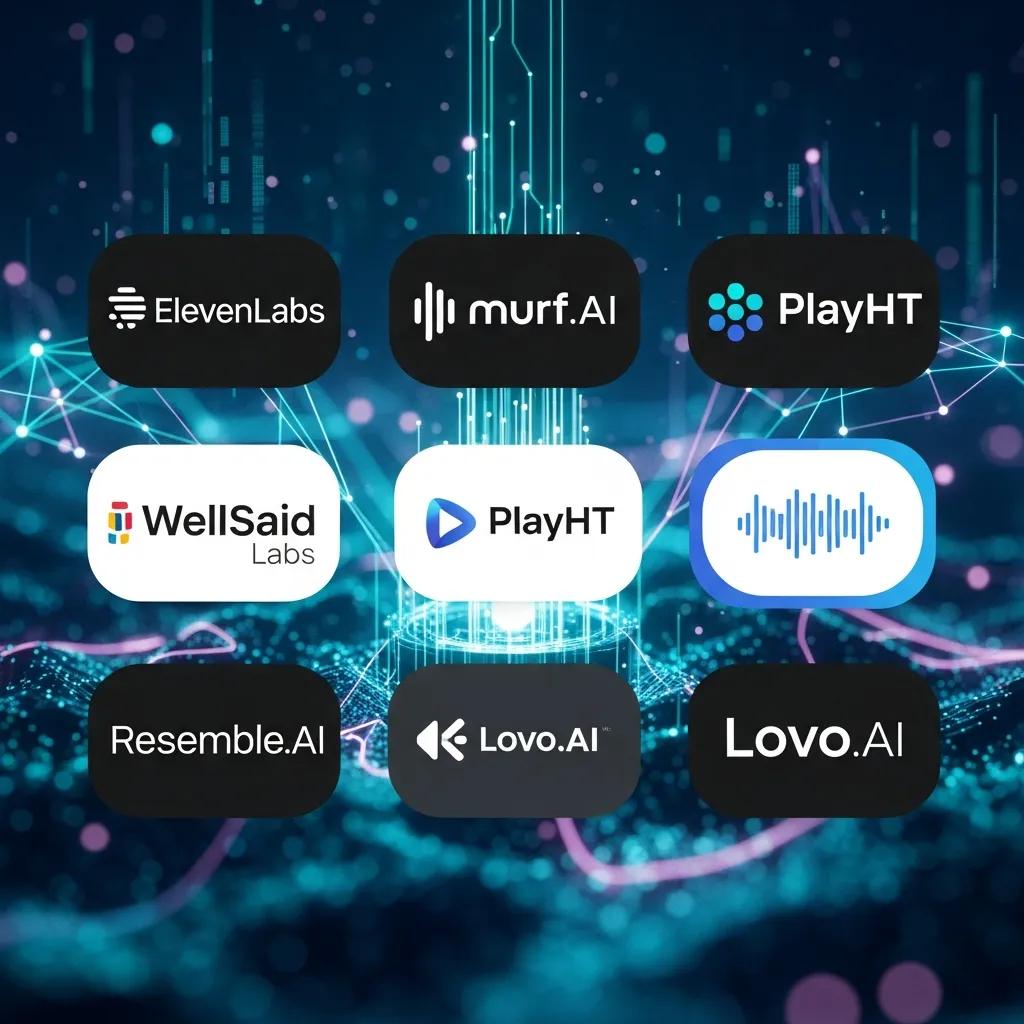
When considering AI TTS solutions, several platforms stand out for their features and voice quality.
These platforms provide robust solutions for developers looking to implement AI TTS into their web applications.
How Do Top AI TTS Platforms Compare in Features and Voice Quality?
Comparing the features and voice quality of leading AI TTS platforms reveals significant differences that can influence user experience. Google Cloud Text-to-Speech excels in language support, while Amazon Polly is known for its realistic voice output. IBM Watson offers unique expressive voice options, making it suitable for applications requiring emotional nuance. Each platform has its strengths, and the choice depends on specific project needs.
What Are User Reviews and Ratings of Leading AI Voice Generators?
User feedback is crucial in evaluating the effectiveness of AI voice generators. Many users praise Amazon Polly for its natural-sounding voices and ease of integration. Google Cloud Text-to-Speech is often highlighted for its extensive language support, while IBM Watson is recognized for its advanced features. Overall, user reviews indicate a strong preference for platforms that offer high-quality voice synthesis and flexibility in application.
How to Integrate AI Text-to-Speech into Your Website for Improved Accessibility?
Integrating AI TTS into a website involves several key steps that ensure a smooth implementation process.
- Choose a TTS API: Select a suitable TTS platform based on your needs and budget.
- Obtain API Keys: Register for the service and obtain the necessary API keys for integration.
- Implement the API: Use the provided documentation to integrate the TTS functionality into your website.
What Are the Steps to Add TTS API Integration for Web Content?
To successfully integrate TTS into your web content, follow these steps:
- Select a TTS provider: Research and choose a provider that meets your requirements.
- Set up your development environment: Ensure your website is ready for API integration.
- Write the integration code: Use the API documentation to implement the TTS functionality.
- Test the integration: Verify that the TTS works as intended across different devices and browsers.
Which Web Content Accessibility Tools Support AI Text-to-Speech?

Several web content accessibility tools complement AI TTS technology, enhancing overall user experience. These tools include:
- Screen Readers: Software that reads text aloud for visually impaired users.
- Accessibility Checkers: Tools that evaluate website compliance with accessibility standards.
- Keyboard Navigation Tools: Features that allow users to navigate websites using keyboard shortcuts.
These tools work in conjunction with AI TTS to create a more inclusive web environment.
Beyond general tools, specific regional efforts are also contributing to web accessibility, such as the development of AI Text-to-Speech systems tailored for particular languages and content management systems.
Ukrainian AI Text-to-Speech for WordPress Accessibility
У статті описано систему синтезу та озвучування контенту на сайтах українською мовою, призначену для спрощення споживання контенту для людей з вадами зору, яка відрізняється простотою інтеграції в найпопулярнішу систему управління контентом на сайтах, а саме CMC WordPress.
Development of a System and Interface for Speech Synthesis in Ukrainian for Websites, 2022
What Are the Accessibility Benefits and Legal Standards for AI Text-to-Speech?
AI TTS technology plays a vital role in meeting accessibility standards set by various legal frameworks.
- Compliance with WCAG: AI TTS helps websites adhere to the Web Content Accessibility Guidelines (WCAG), ensuring that content is accessible to all users.
- Enhanced User Experience: By providing auditory content, websites can improve the overall experience for users with disabilities.
- Legal Protection: Implementing AI TTS can protect organizations from potential legal challenges related to accessibility compliance.
How Does AI TTS Help Comply with Global Web Accessibility Guidelines?
AI TTS assists in complying with global web accessibility guidelines by ensuring that all users can access content in a format that suits their needs. This technology addresses the requirements outlined in the WCAG, which emphasizes the importance of providing text alternatives for non-text content. By integrating AI TTS, organizations can demonstrate their commitment to inclusivity and accessibility.
What User Experience Improvements Result from AI Voice Synthesis?
The integration of AI voice synthesis into web content leads to significant user experience improvements. Users benefit from:
- Increased Comprehension: Auditory content can enhance understanding, particularly for complex information.
- Greater Retention: Users are more likely to remember information presented in an engaging format.
- Enhanced Satisfaction: Providing multiple content formats caters to diverse learning preferences, leading to higher user satisfaction.
What Are the Latest Trends and Future Innovations in AI Voice Synthesis?
The field of AI voice synthesis is rapidly evolving, with several trends shaping its future.
- Neural TTS: Advances in neural networks are leading to more natural-sounding voices that closely mimic human speech patterns.
- Multilingual Support: As globalization increases, the demand for multilingual TTS solutions is growing, allowing businesses to reach wider audiences.
- Personalization: Future innovations may include personalized voice options that adapt to user preferences and contexts.
How Are Neural TTS and Multilingual Support Advancing AI Voices?
Neural TTS technology is revolutionizing the way voices are synthesized, resulting in more lifelike and expressive speech. This advancement is complemented by the growing need for multilingual support, enabling businesses to cater to diverse audiences. As these technologies continue to develop, we can expect even more sophisticated and versatile AI voice solutions.
What Emerging Use Cases Are Driving AI Text-to-Speech Adoption?
AI TTS is finding applications across various industries, driving its adoption. Key use cases include:
- E-Learning: Enhancing educational content with auditory support for better comprehension.
- Customer Service: Automating responses in chatbots and virtual assistants to improve user interaction.
- Content Creation: Assisting writers and marketers in producing audio versions of their content for wider reach.
These emerging use cases highlight the versatility and potential of AI TTS technology in transforming how we consume information online.